Hi, How Can We Help You?

Blog

November 27, 2023

IMMIGRATION has taken a highest troll over the years in CANADA. A high number of foreigners are entering Canada under different sections of immigration programs. International individuals are entering Canada over study permits, work visas, spousal visa, etc. WHY NOT!? 


Canada is known for providing the top standards in education, lifestyle & career. WHO WOULD MISS THE OPPORTUNITY TOWARDS S BETTER FUTURE!? Immigrants in Canada are satisfied with their stable work life and high standard of living.


Under this blog, we are going to discuss about the multiple immigration platforms originated & resides in Canada, under the Canadian government. This blog will also highlight the BEST IMMIGRATION SERVICES provided by the EXPERT IMMIGRATION FIRMS in Canada. Let’s discuss.


MULTIPLE IMMIGRATION PLATFORMS IN CANADA

A detailed outlook is provided on all the immigrations platforms based in Canada and which are under Canadian government. All kinds of immigration services and consultancy are aired through the departments around the country. Here are the details;


  • Immigration, Refugees and Citizenship Canada (IRCC):

A biggest and the most designated immigration platform of Canada. The Immigration, Refugees and Citizenship Canada (IRCC) is the government organisation in Canada that handles immigration and citizenship affairs.


Their responsibilities include managing applications for permanent residence, work permits, study permits, citizenship, and other immigration-related procedures.


  • Service Canada:

Service Canada government based immigration service platform which offers offers information on federal programs and services, including immigration. They can assist with matters such as Social Insurance Numbers (SIN), Employment Insurance (EI), and other related services.


  • Ontario Immigrant Nominee Program (OINP):

The Ontario Immigrant Nominee Program (OINP) is a program specific to Ontario that allows the province to select individuals for permanent residency based on its economic and labor market requirements.


Details and information about the OINP can be obtained from the official Ontario government website.


  • Local Settlement Agencies:

The residents of Milton, Canada or of any other Canadian city; may also have access to local settlement agencies or non-profit organisations that offer assistance and resources to newcomers. They are an aiding to them in integrating into the community.


EXPERT IMMIGRATION SERVICES IN MILTON, CANADA


Immigration services in Milton are limited to expert immigration consultants in Milton. To save your time from a thorough research on expert immigration services Milton; we have hunt down some of the best one’s in town;


LODESTONE IMMIGRATION SERVICES INC:

LODESTONE IMMIGRATION SERVICES INC is well-known for their expertise in helping individuals and businesses with Canadian immigration programs. They have a high review rate and offer comprehensive legal services to their clients. CONSULT LODESTONE IMMIGRATION TODAY AND DISCUSS YOUR CASE WITH OUR EXPERT IMMIGRATION CONSULTANTS.


VCIC – Vajra Canadian Immigration Consultancy Inc.:

VCIC – Vajra Canadian Immigration Consultancy Inc. specialises in Canadian immigration and also provides legal services for various types of immigration applications, including Express Entry Canada and Spousal Visa. CONSULT VCIC TO OPEN DOORS TOWARDS A BRIGHTER FUTURE IN CANADA.


BLUETHROAT IMMIGRATION:

Bluethroat Immigration offers immigration services and has a significant online presence. They provide legal assistance for obtaining citizenship, Green card, student visa. Bluethroat immigration services possesses years of clientele expertise and have solved many rejected application cases. CONSULT THEM FOR RELIABLE & EXPERT GUIDANCE ON YOUR APPLICATIONS.


SHAPE CANADA IMMIGRATION:

Shape Canada Immigration has a strong reputation for their extensive knowledge of Canadian immigration law. They have an impressive rating of 5.0 and offer a wide range of immigration services and consultations. CONSULT THEM TO FOR A RIGHT IMMIGRATION PATH.


END NOTE

ARE YOU READY TO STAND UP & FIGHT FOR THE ‘HIGHER STANDARD FUTURE’ OPPORTUNITY FOR CANADA!? We are here to guide you from the beginning application process till the end of settlement journey. Consult BLUETHROAT IMMIGRATION today, for one on one consultation and strategic approach plan for your IMMIGRATION.

November 27, 2023

BEST IMMIGRATION SERVICES are known and defined by the origin and expertise of the platform. BUT THE REAL CONCERN IS – We are often stuck on searching & finding the reliable immigration services in Canada. WHY IS THAT!? 


Finding the best consultant for Canada Immigration is a rough and tough rollercoaster ride. You will meet numerous consultant in a a way. You will be open to numerous affordable, easily accessible, and guarantee granted firms. BUT WHY ARE YOU STILL PICKY & CONFUSED? This is because you are unsure of their reliability. Your rationale side of the brain is determined to not accept the ‘WOW BUT IMPOSSIBLE’ facts. ARE WE GOING ON A RIGHT TRACK WITH THIS!?  


While keeping this in mind, this blog is designed to target the basic characteristics of an EXPERT IMMIGRATION CONSULTANTS IN CANADA. The aim is to spread awareness amongst the community and the individual lay man; on the rights and wrongs of the immigration consultants. This will help a greater crowd to refrain from any type of immigration scam or fraud immigration consultants. Moreover, this blog will talk about the BEST CONSULTANT FOR CANADA IMMIGRATION and their expertise. Take notes because this blog will be informatively explosive!


CHARACTERISTICS OF BEST CONSULTANT FOR CANADA IMMIGRATION 

Best immigration is a standardised bundle package of numerous professional and legal characteristics. These characteristics are normally looked upon while choosing the BEST. Here is the brief outline;


  • EXPERTISE & EXPERIENCE:

The top immigration services employ a team of knowledgeable professionals who specialises in immigration laws, policies, and procedures. Moreover, the years of experience in handling a variety of immigration cases speak to their reliability and expertise.


  • REGULATORY COMPLIANCE:

Reliable immigration services comply with regulations and are often affiliated with recognised regulatory bodies like the Immigration Consultants of Canada Regulatory Council (ICCRC) or provincial law societies.


  • CLIENT CENTRIC APPROACH:

A client-focused approach involves placing the needs and concerns of clients at the forefront. The best services offer individualised assistance, taking into account each client’s specific circumstances and adapting their services accordingly.


  • DETAILED INDIVIDUAL CASE EVALUATION:

Top-quality services evaluate each client’s situation thoroughly, identifying potential obstacles and prospects. A detailed assessment guarantees that clients have all the information they need regarding the most suitable immigration pathways for their unique circumstances.


  • TRACK RECORD OF ACHIEVEMENTS:

A reliable history of successful cases serves as evidence of the immigration services’ effectiveness. Feedback from clients and reviews can provide valuable insights into the service provider’s performance.


BEST CONSULTANT FOR CANADA IMMIGRATION 


Here are the best hunted down options for you to ‘go to’ ehen stuck on immigration process or visa rejection;


  • Bluethroat Immigration

Bluethroat Immigration offers immigration services and has a significant online presence. They provide legal assistance for obtaining citizenship, Green card, student visa. Bluethroat immigration services possesses years of clientele expertise and have solved many rejected application cases.


  • Vajra Canadian Immigration Consultancy Inc. (VCIC):

Vajra Canadian Immigration Consultancy Inc. (VCIC) is an organization led by Rajiv Sharma, a Regulated Canadian Immigration Consultant. VCIC offers clients a comprehensive and practical approach to immigration matters, helping them make informed decisions about their future in Canada.


  • Regulated Canadian Immigration Consultants (RCICs):

The Immigration Consultants of Canada Regulatory Council (ICCRC) is a resource for finding authorised professionals, like RCICs, who can provide guidance and assistance with immigration programs, application procedures, and necessary documents.


  • Immigration, Refugees, and Citizenship Canada (IRCC):

The government website for Immigration, Refugees, and Citizenship Canada (IRCC) also provides a wide range of information on topics such as immigration programs, application procedures, and necessary documents.

December 20, 2022

The International Experiences Canada (IEC) Program 2023 was officially unveiled today by the Honorable Sean Fraser, Secretary of Immigration, Refugees, and Citizenship. The program has increased the number of eligible candidates by 20%. As on January 9, 2023, applications will be accepted. Those who want to immigrate to Canada as skilled workers will benefit from the new economic immigration schemes the country is implementing. Canada plans to accept a record-breaking 460,000 immigrants this year. The government of Canada views immigration as a means to improve the economy, bring families together, and aid those in need. Prior to the 2015 election of the current Liberal administration, Canada accepted around 260,000 immigrants every year. Before the 2020 outbreak of COVID-19, the objectives were raised to 300,000, and then to 340,000.

It was difficult for IRCC to handle applications in 2020 due to the closing of borders as well as other travel restrictions. Nonetheless, at 405,000, Canada accepted more people to become permanent residents in a single year than it had in any previous year. A considerable number of quotas were distributed via the Canadian Experience Class or provincial nomination programs, respectively, to enable the achievement of these goals (PNPs).

A historic combination of low unemployment and a large number of available jobs has created a labor shortage in Canada. Both of these elements contribute to the country’s rising immigration goals.

Canada has one of the world’s lowest birthrates at 1.4 children per woman, adding to the country’s chronic labor shortfall. Eventually, immigration will be the only option for Canada’s population and labor force to expand, since natural expansion is too sluggish to keep up with the needs of the economy. Canada’s ability to provide public services like education and healthcare relies on a healthy tax base, which can only be sustained with an influx of new residents. One of the world’s oldest populations is in Canada. By 2030, approximately a quarter of Canada’s population, or nine million individuals, will be eligible for Medicare. In all areas of the economy, this will result in a critical lack of labor.

According to Canada’s primary immigration legislation, the Immigration as well as Refugee Protection Act (IRPA), the government must annually declare the Immigration Levels Plan by November 1. The first declaration of immigration numbers for 2022-2024 came in February 2022, as the most recent national election of September 20, 2021 postponed the 2021 announcement.

 Express Entry, available to foreign employees beginning in January 2015, will include Canada’s primary economic immigration programs. Now the scenatio of calling the immigrants is change as after pandemic Canada is looking for more immigirants that have different skills sets. Forexample if a person is good in Data Analyst skill then he or she will be preferably hired by the Canadian or they can easily apply through Express entry or they can get engaged in the Provincial Nominee program.

As there are number of programs through which applicants can apply for the Canada in which one of the prominent is Express Entry, other than are provincial nominee program.

Express Entry

Since its introduction in 2015, that Express Entry System has become a highly sought after method of entering the country legally. Because of the streamlined procedures involved in making the transition. It’s also the quickest route to immigration to Canada for professionals, taking an average of only six months. As a result, it is often regarded as the simplest route to Canadian PR.

For this subset of immigration, a Comprehensive Assessment System (CRS) is used to calculate a score out of 100 for each applicant. Using the candidate’s age, language proficiency, job experience, education, etc., this tool determines a score. The IRCC determines the cutoff for eligibility (Immigration Refugee and Citizenship Canada). Those who get a high enough score are granted permanent resident status in Canada. Therefore, they are given the ITA. A lot of people who want to move to Canada use the Express Entry system since it seems to be the simplest option. The result of the most recent Express Entry Draw was released on November 23, 2022, and the corresponding score was 491. After receiving the score, the applicant may quickly and simply begin the procedure for obtaining a Canadian permanent resident visa.

Provincial nominee program

People who did not make the cut for Express Entry may still be eligible for provincial nomination. Using the Canada Provincial Nominee Program is the simplest route to permanent residency in Canada. Each province in Canada has the authority to invite and nominate talented workers for immigration to the province based on the province’s specific labor market needs and occupations in demand. There are essentially two paths to provincial nomination. The applicant has the option of applying to the province directly or through the Canada Express Entry connected models. In Canada, each province uses a somewhat different system to determine who is eligible for benefits. Inside the Express Entry immigration system, the applicant will get 600 more points for being nominated by a province.

Work permit through Job offer

Skilled workers who have been offered permanent employment in Canada may apply for immigration under this category. The Canadian government is very interested in compelling the company to recruit regional citizens. So, it’s up to you and your company to show why you’re essential to the role. To bolster your case, your company should fill out an LMIA application and submit it to ESDC (Employment and Social Development Canada). In addition, you’ll need to show that you’re a valuable addition to Canada’s workforce by documenting your education and previous job experience. The work visa has the drawback that it may only be used for one specific job profile and with one specific company; if the applicant intends to switch jobs or companies, they must apply for and get new work permits from the appropriate authorities.

Applied for Student Visa

In Canada, students have access to a comprehensive curriculum that places a strong emphasis on hands-on learning across all subject areas. As a result, it’s the most popular route into the nation. The candidate must have been admitted to a Canadian university in order to apply for a study visa. The application procedure requires the submission of a Statement of Purpose, letters of reference, and essays detailing the applicant’s motivations for pursuing the course of study. If you’ve been accepted to a school on the basis of your qualifications, the next step is to apply for a temporary permit via the Immigration and Citizenship Canada (CIC) website, where you may also submit the necessary supporting documentation for your visa.


December 20, 2022

Due to severe shortages in the healthcare sector, foreign-trained medical professionals have excellent prospects of gaining employment in Canada and eventually becoming citizens. As now the country Canada is looking for the requirements that they need to fullfil because they are facing lack og shortages in terms of trained doctors.

Shortage of Doctors in Canada

There is a critical lack of healthcare workers in Canada. The Canadian Medical Board (CMA) issued a dire warning in early 2022 about the country’s dire need for additional healthcare professionals. Two years into the epidemic, groups representing health professionals throughout the nation are raising the alarm that Canada’s health care system is failing. There is little chance of success if we don’t take action right away. It may be getting better for the average Canadian, as public health restrictions are being relaxed, but health care providers still have a long way to go.

Pandemic has created shortage in Canada

The 2 years of COVID-19 have taken a toll on healthcare personnel, leaving them severely exhausted and burnt out. Now, they must contend with significant system long delays and a lack of colleagues to help meet rising patient demand. As a result of severe shortages in the healthcare workforce, anada is actively recruiting medical professionals with international training. Also, there is a high demand for medical professionals in Canada but a low supply of medical schools, many Canadians who are denied entry choose to pursue their medical education in other countries, such as the United Kingdom, Denmark, Israel, british United States, and the Caribbean.

Canada has been working hard to make it easier for international medical professionals to immigrate there and have their credentials recognized. As part of these changes, additional residency positions will be made available for graduates of foreign medical schools.

The provincial and federal governments of Canada recognize that foreign-trained medical professionals who want to work and reside in Canada have difficulty in gaining credential recognition. It is well-known that many international professionals have difficulties obtaining work in Canada due to difficulties in having their qualifications recognized or in finding efficient means of having their credentials improved to meet Canadian criteria (re-credentialling). I have also found that there are more medical licensure and regulation in Canada is handled just at provincial level. The federal government is contributing cash to encourage the regional governments to enhance the procedure. There was $115 million allocated for it in the most recent federal budget. The shortage of residency positions is a significant barrier for international medical graduates who want to work in Canada.

The Ontario Fairness Commissioner, the Ontario Medical Association, and the College of Physicians and Surgeons of Ontario have all proposed increasing access for internationally trained physicians (IEPs) and increasing the number of residency positions available to IEPs as a solution to the healthcare crisis. In order to perform medicine in Canada, non-Canadian citizens are required to have a degree from a medical institution recognized by the Canadian government. The World Directory of Medical Colleges is where you may check to see whether your institution is included in the worldwide network of medical education. If you are looking for your school, “Canada Note” may be found in that online directory. Therefore, graduates of this medical school will be recognized by all Canadian medical associations and regulatory bodies.

The first step for a newly minted MD is to pass the MCCQE Part 1 test, administered by the Medical of Canada. In addition, they need to score well on the National Professional Collaboration (NAC) Test, which is used to determine whether or not an applicant is ready for a residence program in Canada. To practice medicine in Canada, a medical graduate from outside the country must first get a work visa from the IRCC and then apply for a postgraduate residency position via the Canadian Residents Matching Service (CaRMS). It is the responsibility of CaRMS, a national organization, to place Canadian medical school graduates in appropriate residency programs throughout the country.

International applications for entry level work in Canada

According to reports, international applications for entry level work in Canada dropped by 40% between 2013 and 2022, going from 2,219 to 1,322. This is according to the Canadian Homeowner Matching Service (CaRMS), a national organization that fits medical school educators with postgraduate training residencies. There is growing consensus amongst experts that expanding the number of residencies available to overseas medical school graduates might assist Canada address its physician labor problem. If they are accepted into a residency program in Canada, medical professionals who were educated outside of the country will work under the supervision of a Canadian medical institution for a minimum of two years. Then, they’ll join the Academy of Family Doctors of Canada after passing their family medicine certification test (CFPC). Finally, the physician must apply to a medical board in a province or territory for permission to practice family medicine. Just under one-third of all Canadian doctors have an international educational background, and this is especially prevalent in the field of family medicine. However fewer and fewer foreign-educated medical professionals are making the effort to compete for Canada’s shrinking pool of residency slots.


November 14, 2022

Canada’s population is expected to grow by about one-third over the next two decades, with immigrants making up more than a third of that growth. This is based on projections from Statistics Canada, which show that Canada’s population will increase from 36 million to 46 million in 2036.

The projections are based on assumptions about immigration levels, fertility rates and mortality rates. The report says that immigration will be the main driver of population growth in Canada over the next two decades. Immigrants could make up more than a third of Canada’s population by 2036, according to the latest census data. The census found that the percentage of the population who are immigrants has increased by nearly 10 per cent in the last five years.

Country Welcomed 1.2 Million Immigrants

The country welcomed 1.2 million newcomers between 2011 and 2016, with most coming from India, China, and Syria. Immigrants are a crucial part of Canada’s population and economy. Many immigrants come to Canada with the hope of a better life. They are often highly skilled, educated, and entrepreneurial people who contribute to the Canadian economy in many ways.

However, it is not easy for immigrants to find work in their field or start their own businesses right away. They may need to take jobs that are different from what they studied or worked before. This can be difficult for immigrants who want to start their own businesses because they may not have enough money saved up or access to credit.

Canada has a number of programs that help immigrants settle into their new homes and find work, such as the Federal Skilled Worker Program (FSWP) and Provincial Nominee Programs (PNPs). These programs allow provinces and territories to nominate certain qualified individuals for permanent residence in Canada based on criteria such as education level, language skills, employment experience, age, etc,

Canadian Census

The most recent Canadian census showed the greatest number of new immigrants ever, which was a little over 1.3 million people who made Canada their permanent home between the years of 2016 and 2021. The percentage of recent immigrants who settled in Atlantic Canada increased from 1.2% in 2006 and 3.5% in 2021, representing an almost threefold increase in that time span. The objective of the Canadian government on immigration is to sustainably raise the overall amount of immigration in order to boost the country’s economy, bring separated families back together, and aid refugees in need of humanitarian assistance.

The economic class, the family class, and the refugee class are the three categories of immigration that Canada accepts. Immigrants who fall into the economic class are those who have been singled out for their potential to make a positive impact on Canada’s economy, whether that be through one‘s capacity to satisfy the requirements of the labour market, or to own or manage a business, to have a significant investment, or to establish their employment opportunities.

Those who have a Canadian citizen or legal resident sponsor may enter the country under the family class. The ultimate objective is to make it possible for couples and families to be reunited in Canada. People who can prove they have a spouse, companion, parent, grandparent, or kid in the United States automatically qualify for permanent residence status.

Immigrants who have been granted permanent residence status as refugees have shown a genuine fear for their safety in their native country owing to persecution for reasons of race, creed, nationality, participation in a social group, or political opinion. Those who have been profoundly impacted by war or conflict and/or who have experienced a major violation of their human rights are also included here.

Canada’s ageing population and declining birthrate have a chilling effect on the country’s economic or labour force expansion. Due to sluggish growth, Canada is unable to raise taxes to fund essential social services like healthcare and education. Canadian immigration has been rising to help the country’s economy and finances.

Immigration Levels Plan

The government updates its Immigration Levels Plan annually to detail its goals for immigration in the next three years. The plan details the expected influx of immigrants as well as their demographic profile. Canada anticipates a total of more than 430,000 new legal residents in 2022, with over 60% of these people belonging to the economic class.

In addition to having a relatively small population, Canadians tend to live longer than people in any other country. The result is a strain on the economy and the budget. Low rates of natural population increase in Canada have a knock-on effect on the size of the working-age population and the country’s GDP. The Canadian government has a hard time collecting the tax revenue necessary to fund essential social programmes like education and healthcare, which contribute to the country’s high quality of living because of the slow pace of economic development.

To that end, Canada has been steadily expanding its immigration intake since the late 1980s, therefore boosting the country’s population, working population, and GDP growth. Immigration has become more important to Canada’s population & labour force expansion, as well as its economic development.

Think about the 9 million baby boomers who will be eligible for retirement in Canada by the time they turn 65. Consequently, the number of people actively employed in Canada will decrease at the same time as the country’s healthcare costs would increase. Canada has indeed been proactive in addressing this issue by steadily increasing its immigration objectives for more than 30 years.

Since 1988, the graphic below shows that Canada has consistently accepted over 200,000 immigrants per year. Over the last several years, it has chosen to boost production to more than 400,000 units annually. The current immigration rate in Canada is close to 1.1%. As a result, Canada accepts three times as many immigrants per capita as the United States.

Demographic Realities of Canada

The demographic realities of Canada, together with the current immigration patterns, suggest that the country’s immigration numbers will continue to rise steadily over the next years. Undoubtedly, immigration will continue to play a vital role in maintaining the budgetary and economic stability of the nation.

Additionally, the necessity of immigration is said to have grown in light of the recent coronavirus outbreak. In the near term, COVID-19 has harmed Canada’s economy and boosted government expenditure on social services. Furthermore, in 2019, the Canadian birth rate reached a record low of 1.47 children per woman. Owing to Canada’s already low birth rate and the possibility that the pandemic would further cut the birth rate due to economic insecurity, Canada will rely even more heavily on immigration to meet its future demographic needs. Low birth rates in Canada would make immigration a greater contributor to the country’s growing labour force. Canada’s government expendituresv after COVID-19 will need a larger revenue base, which may be achieved  through immigration.


November 7, 2022

Canadian Prime Minister Justin Trudeau has been a major proponent of the progressive and liberal values that Canada stands for. But, it seems like he is not the only one who is in favour of these values. In a recent study, it was found that the CRS score, which stood at 500, dropped to 498. This is a major decline in just one year. The decline can be attributed to the policies of President Trump as well as Canada’s own immigration policy. The CRS score is an index used by scholars to measure countries how welcoming they are to refugees and immigrants.

 On October 26, 2022, there was a draw for all of the Express Entry programmes, which was the 234th draw for individuals seeking permanent residence via Express Entry. As a direct consequence of this, the number of Comprehensive Assessment System (CRS) points necessary to qualify for an invite to apply (ITA) has been reduced in comparison to the all-program draw that took place on October 12, 2022. In Canada’s most recent all-program Express Entry draw, the minimum score required by the Comprehensive Ranking System fell below 500 for the first time since the program resumed operations after the pandemic.

Minimum CRS Required

The minimum CRS score necessary for entry into the draw on October 26 was 496, four points less than the draw held on October 22. In addition to that, a total of 4,750 invites to apply were sent, which is the largest since the all-program draw process was restarted in July. It indicates that Canada has, as of yet, distributed 35,615 invites in the year 2022, the bulk of which have been sent after all-program draws resumed operations in July.

In 2021, IRCC awarded a record number of 114,431 ITAs, all of which were granted to applicants for the Canadian Experience and the PNP. It surpassed the old record of 107,350, which had been established in the year 2020.

The rule for breaking ties

The rule for breaking ties was used for the first time in the most recent draw, which took place on May 9, 2022, at 5:04 am Eastern Standard Time. If more than one applicant met the required minimum score on the CRS, invitations were only extended to those applicants whose Express Entry profiles were received before the specified date and time.

The lowest Comprehensive Assessment System (CRS) score required to get an invitation was 496, and 4,750 people were given invitations. Candidates from the Federal Skilled (FSWP), the Federal Skilled Worker Program (FSTP), and the Canadian Experience Classes (CEC) were all considered for invites. All of these services are a part of the overarching Express Entry system.

From then until December 2020, all Express Entry program drawings were suspended. During the hold, invitations to apply were restricted to those who were either CEC members or PNP nominees (ITAs). Due to a backlog in submissions due to travel restrictions relating to COVID-19, the drawings have been put on hold. It was reported in September of 2021 that IRCC has also suspended CEC drawings.

Inviting Immigrants

Canada is inviting immigrants to join the country by giving them a pathway to citizenship. The country has been welcoming immigrants for many years and it continues to do so in 2018.

In 2017, Canada welcomed over 300,000 new immigrants. This number is set to increase in 2018 with the introduction of the Express Entry system which will allow skilled workers to apply for Canadian permanent residence from within Canada. Canada has always been a welcoming country for immigrants, but the country is facing a new challenge in the upcoming years. There are many factors that contribute to this issue, such as population growth and labour shortage. You will analyze the issue and provide potential solutions to help Canada deal with this problem.

The Canadian government is trying to find ways to keep up with population growth and labour shortage by implementing policies that help immigrants better integrate into society. The policies include providing free education, free healthcare, and easier access to citizenship.

Comparison between 2021 to 2022

Statistics from Immigration, Refugees, and Citizenship Canada (IRCC) show that in Q1 of 2022, the country welcomed over 114,000 new permanent residents.

There were 35,415 permanent new residents in January, 37,335 in February, and 40,785 in March. Through the use of streamlined procedures, Immigration, Refugees, & Citizenship Canada (IRCC) seems to have been able to enhance its services to Canadians. This has resulted in twice as many decisions being made by IRCC than during the same period in 2021. Furthermore, IRCC has been updating and expanding its services for foreign nationals seeking permanent residence in Canada. Among these features are digital citizenship exams, online naturalization ceremonies, and a database to monitor applications. This has helped bring 113,535 new legal residents to Canada in Q1 2022.

The one-time, transient to permanent residency (TR to PR) channel, which was closed on November 5th, 2021, has been a major contribution to this year’s immigration numbers when compared to the same period of the year 2021. As of the end of 2021, IRCC has processed over 500,000 decisions and received over 405,000 additional permanent residents. Canada has never before accepted so many emigrants in a given year. More than 560,000 applications for study permits were approved by IRCC in 2019. Around 169,000 people in the same year applied to change their status in Canada from worker to permanent resident.


November 3, 2022

Canada is taking highly skilled immigrants as they are upgrading their Canada has been very welcoming to highly skilled immigrants in the past few years. In the year 2017, Canada had a total of 182,000 immigration applications for highly skilled workers. The country has also been open to issuing more visas for temporary work and international students. There is a shortage of high skilled immigrants in the workforce within Canada. This is because they are educated in their home countries and are not willing to work in low-skilled jobs. Although Canada has been struggling with this issue for a while now. Canada needs to find a way to fill these positions or else it will be at risk of losing its competitiveness as an economy. The country needs to find ways to make these jobs more desirable for highly skilled immigrants and also find ways to train them on the job.

Canada has a special visa program that allows companies to hire high-skilled foreign workers. This visa program is called Express Entry and it’s designed for people who have a good education, work experience, and language skills. The Express Entry system gives points for factors such as age, education, work experience, language skills and whether the person has a job offer in Canada. The more points someone has, the higher their chances of getting an invitation to apply for permanent residence in Canada.

Campaign to attract international students

The Canadian government has launched a new campaign to attract international students who are graduating from Canadian universities. The campaign is targeting highly-qualified international graduates with the goal of attracting them to apply for permanent residency in Canada. The campaign, titled “Why, not Canada?”, will be aimed at students who have studied in Canada for at least one year and are now graduating from a Canadian university. The goal is to encourage these students to stay in Canada after graduation and work or start their own businesses. This campaign is part of the Government of Canada’s efforts to improve the country’s immigration system and make it more attractive for high-skilled immigrants.

High standards of living

Canada is a country with a large population and high standards of living. Canada has been attracting people from all around the world for decades because of its high standards of living, vast natural resources, and political stability. Canada’s economy is one of the most powerful in the world. It has the tenth-highest per capita income globally and ranks highly on quality-of-life measures like education and healthcare. We have also seen that most people are reaching Canada for better opportunities because it is a country with a large population and high standards of living.  Most of all Canada is targeting highly qualified people for their state as they are getting developed day by day and nearly in the future they will grow more with more opportunities. Under this situation, they are hiring more people that are highly qualified with more skills that they can easily utilise and availed them.

It is possible to get a sense of how robust the economy of Canada is by assessing the number of people who are employed also known as the working population and who pay taxes to help finance our public services, including health care. The number of people actively looking for work in Canada continues to increase on an annual basis, mostly as a result of immigration. Employers would have a difficult time filling available positions with sufficiently competent people if it weren’t for the influx of immigrants. The main reasons for this trend are that people in Canada are living longer & having fewer children. Both the number of individuals working and the number of persons attending school is declining. As a direct consequence of this, the pool of available and prospective employees who were born in Canada is restricted. Not only do immigrants contribute to the economy by filling gaps in the labour force while paying taxes, but they also contribute by spending money on products, housing, and transportation, which is a significant boost to our overall economic activity.

Immigrants are making a difference in Canada by contributing to the economy and creating jobs for Canadians. Immigrants contribute $25 billion to the Canadian economy each year, which is about 3% of Canada’s GDP. Furthermore, immigrants create jobs for Canadians by filling positions that are in high demand or have skills that are not available in Canada. With the recent changes to Canadian immigration policy, there has been an increase in the number of skilled immigrants coming into Canada and filling these positions. This leads to a positive impact on both immigrant and Canadian communities because it increases economic activity, creates jobs for Canadians and helps with labour shortages. Due to its robust economy which is also quite diverse, Canada is a very affluent country. Mining natural resources including gold, zinc, copper, and even nickel, which are all put to significant use in other parts of the globe, accounts for a significant portion of the country’s gross domestic product (GDP). Additionally, Canada is a significant participant in the oil industry, and the country is home to a number of important oil businesses. The objective of the Canadian government on immigration is to sustainably raise the overall amount of immigration in order to boost the country’s economy, bring separated families back together, and aid refugees in need of humanitarian assistance. The economic class, the family class, and the refugee class are the three categories of immigration that Canada accepts.


October 31, 2022

In 2022, the Canadian government is looking to immigration as a potential answer as the country begins to recover economically from the consequences of COVID-19. It is never too early to begin the process of immigrating to Canada. There are a number of interesting new developments coming to the country’s immigration system in 2022.

If the pattern that is now occurring does not drastically shift, then the increase in the number of people living in Canada will not be the result of families in Canada having more children. Because of declining fertility rates and increasing average age of the population, it is projected that natural growth, which can be calculated by subtracting births from deaths, would slow down during the next several years. The ratio of number of children to the number of women in Canada is expected to reach a new all-time low in the year 2020 when it is expected to reach 1:4. This natural growth will continue its downward trend over the following several years according to the high growth scenario, and there is a small chance that it could even become negative during the transitional period among 2049 and 2058.

Immigration will be responsible for a significant portion of the population increase that will occur in Canada over the course of the next several decades. There are a number of projections for Canada’s population growth over the next several decades, and all of them include immigration playing a substantial role. This action will continue for the foreseeable future. Over the course of the past year, immigration has continued to add to the expansion of Canada’s population as well as its economy. In 2021, a record number of immigrants will arrive, and ministers have taken stock of the collaborative efforts of the FPT and welcomed and settle nearly 405,000 of them.

Rise in Immigration for Upcoming Years

The objective of the Canadian government on immigration is to sustainably raise the overall amount of immigration in order to boost the country’s economy, bring separated families back together, and aid refugees in need of humanitarian assistance. The economic class, the family class, and the refugee class are the three categories of immigration that Canada accepts. Immigrants who fall into the economic class are those who have been singled out for their potential to make a positive impact on Canada’s economy, whether that be through their own capacity to satisfy the requirements of the labour market, to possess or run a business, to have a significant investment, or to establish their own employment opportunities.

According to the Population Estimates for Canada, Provinces and Territories, 2021 through 2068, the federal government plans to use the average age of immigrants to Canada from 2022 as a method to address the labour deficit, which is a persistent scarcity of young people.

Since the arrival of the first European settlers in the 16th century, Canada has been and still is a popular destination for those seeking to start new lives elsewhere. At the present time, yearly immigration in Canada totals somewhere about 300,000 new residents, making it one of the countries with the greatest rates of immigration relative to its population. Moreover, eight million immigrants who had been granted permanent residency were residing in Canada as of the year 2021; this represented around 21.5 percent of the entire population of Canada. The Canadian public has a divided view on the appropriate level of immigration, with 39% of respondents believing that the number of immigrants should be reduced while 34% expressing contentment with the current level. Even though (or possibly because of) this strong history of immigration in Canada, public opinion is divided.

Immigration laws in Canada

The Immigration as well as Refugee Protection Act, which was passed in 2002, is the major piece of legislation that governs immigration in Canada. According to Canadian immigration law, there are four different types of immigrant admission classes that are included with the family class, which allows individuals or legal residents to sponsor relatives for admission into Canada; this same economic class, which offers an opening to applicants and their close relative who really are likely to contribute to a Canadian economy; this same refugee class, that also provides admission to refugees fleeing persecution and/or torture; as well as the ‘other’ class, which contains immigrants accepted for a variety of other reasons. Persons who moved to Canada for job reasons account for more than twice as many permanent residents as individuals who immigrated mainly for family reasons. Skilled workers make up the single biggest group of immigrants in Canada. In 2021, only about 17 of the total number of immigrants that entered the country were refugees. When looking at refugee arrivals in every class, it was found that over ten thousand were ‘government-assisted.’ This means that the state offers aid to the refugee for up to a year with finding a job, finding housing, obtaining food, and obtaining clothes.

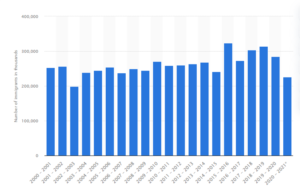
The number of immigrants to Canada has been steadily rising over the previous two decades, with 226,203 persons expected to arrive from July 1, 2020, through June 30, 2021. This number is down from the expected 313,601 immigrants that entered Canada in 2018–2019 but is much over the estimated 199,170 who entered in 2002–2003.

Immigration to Canada by country

According to the results of the most latest census, the nation of origin of persons who were born in Canada to parents from another country was most often India, followed by China. As we look to the future, it is probable that India will continue to strengthen its position, with approximately one-quarter of incoming immigrants to Canada arriving from the nation in 2019.


October 14, 2022

If you compare Canada to other industrialized countries, you’ll find that its immigration rate is among the highest. Over 310,000 people will immigrate to Canada in 2018. Some 57% of such immigrants will bring with them marketable skills.

There is a widespread perception that Canada is a welcoming country that also provides a secure environment in which families may thrive. It ranks among the top three most popular nations in the whole world and is rated number one for life quality. Around 1.2 billion people call Canada home, making it the second-most populous nation in the world while having the second-smallest land mass. The reputation that Canada has earned over the years as one of the nicest countries in the world is well deserved. In addition to this, it is widely acknowledged as being among the most secure residential areas in the world. You won’t really have to seek very hard to find the positive aspects of relocating to Canada or becoming a permanent resident there if you make the decision to do so.

We have found that most of the applicants in the year 2022 are approaching Canada where they will be granted permission to expand the company in Canada. If the SUV application you submitted is in the hands of the appropriate individuals and also if all of the conditions are met, and if the requisite evidence is delivered then there will be high chances to approach the Visa program. According to the IRCC, the SUV program has an overall start-up Canada visa success rate that is more than 75%.

We have also found that Canada they have ambitious new immigration goals, including the arrival of over 450 thousand permanent residents that year.

By 2024, over a million individuals from every corner of the globe will call Canada home. More than half of the new permanent residents will come via the immigration streams designed to welcome international students, who are a primary emphasis in the new objectives. After a period of declining enrolment due to the pandemic, Canada’s higher education sector is seeing a spike in applications from overseas students.

Canada Immigration creating the Boost

Canada is increasing the number of permanent residents it accepts each year, which is good news for foreign students studying in Canada since it means they will have a greater chance of staying in the country once they finish their degrees. According to the 2022–2024 Immigration Levels Plan, the Canadian government aims to accept a total of 431,645 legal residents for 2022, 447,055 in 2023, then 451,000 in 2024. As far as immigration to Canada is concerned, these goals are unprecedented. More than 405,000 individuals from all around the globe were accepted as permanent residents in Canada in 2021, an all-time record for a single year.

The “Federal High Skilled” category, which allows applications from overseas graduates of Canadian universities, will be the primary driver of the expected rise. A total of 111,500 more parking spots will become available in that group by the year 2024, up from the current 55,900. The Federal Skilled Program, as well as the Canadian Experience Class, are already in use for overseas graduates and will contribute to the growth of these programmes.

Reasons for Start-Up Visa Programs in Canada 2022

The job market in Canada

The government of Canada emphasises the need of attracting employees from other countries to the country in order to keep the country’s economy growing and to fill skill gaps that exist in a variety of different sectors. The defiance that Canada takes towards immigration is not anything brand new; nonetheless, the situation of the rest of the globe has altered significantly over the previous two years. Even when unemployment rates climb higher in other countries, Canada’s job market remains mostly untouched. Therefore, ex-pats who possess the skills and expertise to back them up will discover that the economic environment in Canada might possibly be more inviting than the current economy in those countries that were most impacted by the global crisis.

A further point of interest in Canada is a healthcare

When compared to the premiums paid by Americans, Canada’s income, sales, and corporate taxes provide a significantly more affordable health care system. Among thousands of Americans, in the United States under Obamacare, it’s a matter of “pay or dies” if they don’t have health insurance. There is no dearth of employment opportunities in Canada; nevertheless, the country’s healthcare system is both reasonably priced and of a very good standard. When it relates to making life in Canada as enticing as possible for immigrants already here, both the nation and the government are undoubtedly serious about their efforts.

Canada is a diverse multi-cultural

Over the years, Canada has served as a home to many immigrants. Moving to Canada, where the population is quite diverse, means joining a group that is already used to communicating and mingling with people from other countries, which may make a huge difference in adjusting to your new home.


October 12, 2022

The Canada Processing Study Permits for International Students is a program that is designed to allow international students who are studying in Canada to work off-campus for up to 20 hours per week during the academic year and full-time during scheduled breaks. At the end of the month of July, Canadian immigration authorities had processed approximately 360,000 study permit applications from foreign students, setting a new record for the number of applications processed in a single year.

We have also found that there is an increase of 18.4% when compared to the approximately 304,000 jobs finished during the same time period the year before, which was also a record-breaking year. Canadian education is very worthwhile. Students who study abroad and graduate may be eligible for working visas and immigration programmes leading to permanent residency.

It is possible to work up to twenty hours a week while studying full-time in Canada with a legitimate study permit, and full-time during approved breaks. Graduates of postsecondary institutions are eligible to apply for a “Post-Graduation Work Permit” (PGWP). Working lawfully in Canada is made much easier with one of these licenses, which are good for a minimum of eight months and up to three years. Holders of the PWGP are not required to work any certain number of hours each week. They might decide to work alone or for a company. Most crucially, they do not have to complete an LMIA. By virtue of this exception, the employer need not demonstrate that no Canadian or permanent resident is willing and able to fill the position.

Foreign students who complete their post-secondary education in Canada often find it easier to apply for permanent residence. Every one of Canada’s 10 provinces has its own immigration program specifically for enticing new international college grads to settle there permanently. There are many in many provinces, including three in Manitoba and four in British Columbia. Most of the options cater to a wide range of graduates, while others are tailored to those with specialised knowledge in fields like the natural and applied sciences. People who want to be their own boss might also find opportunities. Some courses are only open to those who have completed a certain number of years of schooling, such as a Master’s or a Doctorate.

We have also gained job experience in Canada and may help international students who are applying for immigration through the Express Entry system. Canada’s three primary federals are linked to economic immigration programs in which the Federal Skilled Worker Project, the Federal Skilled Worker Plan, as well as the Canadian Experience Class are all managed using Express Entry.  We have also found that with the help of possessing relevant job experience in Canada is seen favorably by immigration officials, and may help a candidate earn more points.

Pursuing Study in Canada for Students

Canada has some of the best education systems in the world. The country has a diverse population with people from all over the world coming to study there. There are many institutions that offer courses in different fields of study that cater to international students as well as local students.

One way to get into these universities is through a student visa which is granted to international applicants who want to come to Canada and pursue their studies there on a full-time basis or part-time basis while they are working on their degree or diploma.

  1. The Canada Processing Study Permits for International Students is a program that is designed to allow international students who are studying in Canada to work off-campus for up to 20 hours per week during the academic year and full-time during scheduled breaks.
  2. The government offers this program because they want international students in the country, so they let them work off campus for a limited number of hours each week or just when there are scheduled breaks from school.

IRCC’s Service Criteria

Most of the students are engaged in having a large number of software applications in inventory is commonplace in Canada. The majority (1.1 million) of the applications currently available meet IRCC’s service criteria. We have also found that around 80% of applications must be handled within the established service levels for the department to be considered successful. Expect a backlog of over a million applications to be processed.

But right now, there are over 1.3 million apps in stock, and 54 pe The IRCC is taking many actions to reduce the number of pending immigration applications. IRCC plans to recruit up to 1,250 more workers by the end of the autumn in order to enhance their processing capability and clear up the backlog in applications.

IRCC is also making adjustments to maintain short processing times permanently. With the help of $85 million in extra financing from the Canada Economic as well as Fiscal Review 2021, IRCC recently digitised the application process for more programs and established technological solutions to facilitate speedier processing times in the long run.

To keep applicants updated on expected processing timelines, IRCC has pledged to provide monthly statistics on its website. The Immigration, Refugees, and Citizenship Canada (IRCC) made a release on August 24 based on July data, offering comprehensive statistics on present and expected wait times for various categories of immigration applications.

Timing estimates for residency permit applications

In Canada, there were 1,400,000 pending petitions for temporary residency since around July 31, 2022. Visas for tourism, labour, and education are all included in this category. 580,000 (or 41%) of the applicants met IRCC’s service requirements. Backlog forecasts were broken down by IRCC into the following categories of temporary residence:

Timing for the processing of work permits

IRCC predicts that by the end of the year, its backlog for work permit applications would increase from about 30% of applicants to over 60% of applications. Yet, IRCC forecasts a sizable decline in 2023, with the backlog reducing to 30 % by March of that year.

Canada’s goal is to process 80% of applications for work permits from outside Canada in less than 60 days. The processing time for an IEC work permit is 56 days, which is less than the processing time for most other work licenses. Most of all we have also observed that in Canada, immigration team received tens of thousands of applications this year under the Canada-Ukraine Authorization of Emergency Travel program. This initiative has resulted in a dramatic rise in the backlog of applications for Canadian work permits, which was not expected before the conflict in Ukraine.